 Cursive Generator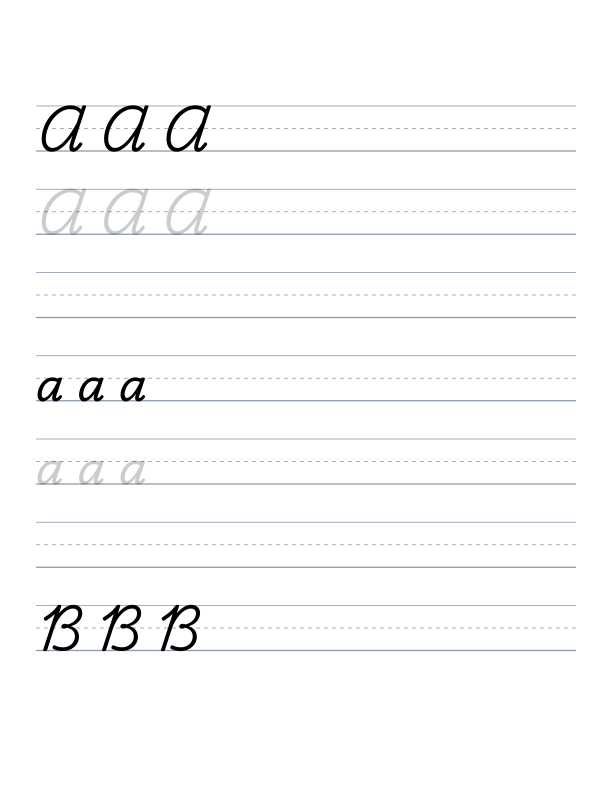
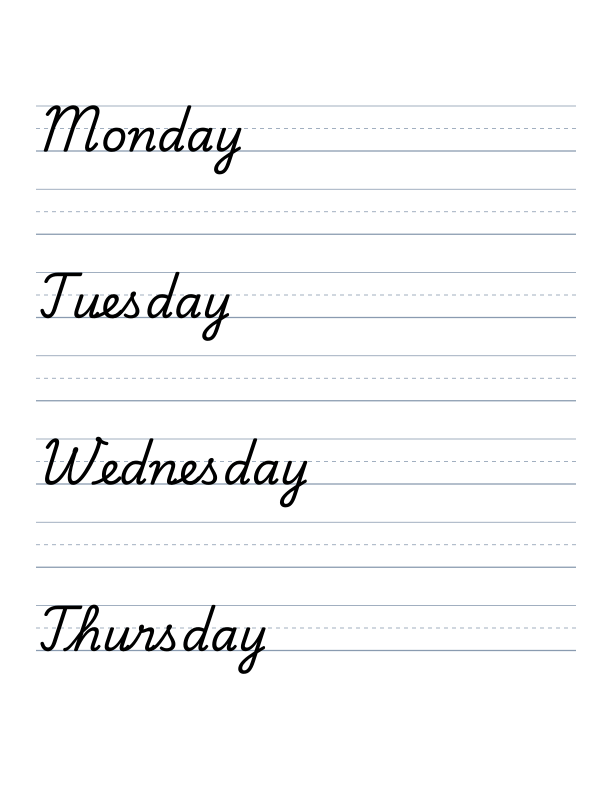
Grade 3 adds capitals and full sentences. Capitals are taught after lowercase because half of them do not join; the days-and-months sheet gives capitals real work to do.
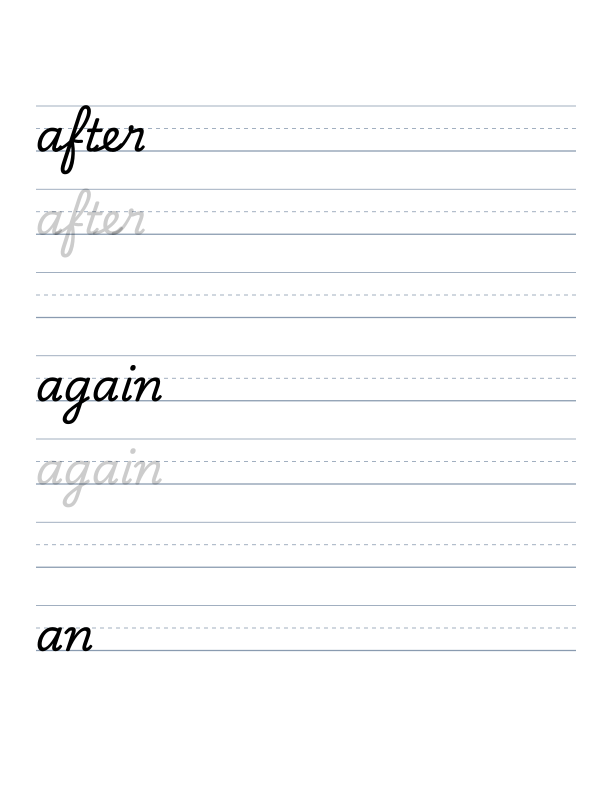
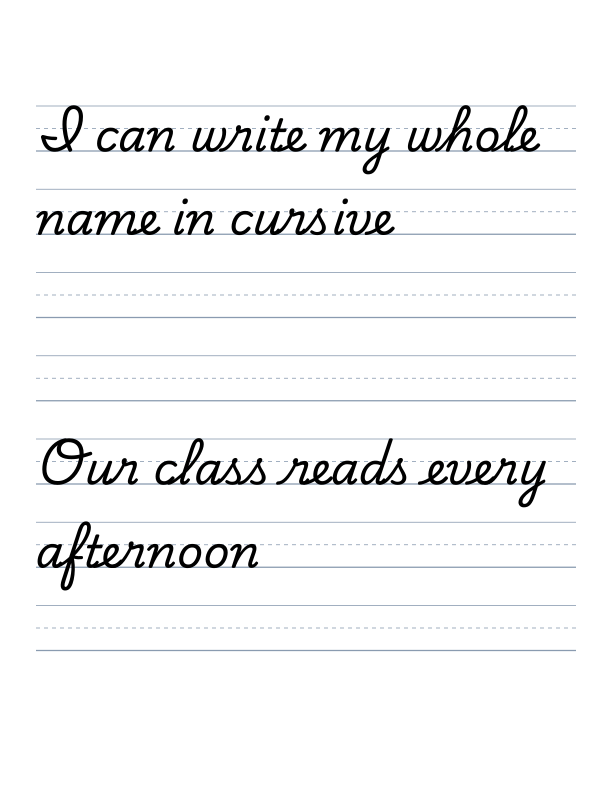
Third grade adds the capitals and puts them to work. The capitals sheet goes through all twenty-six with traced and independent rows, and the days-and-months sheet gives each capital a reason to exist: every entry begins with one, and the child learns which capitals join to the letter after them (A, C, E, J, K, L, M, N, R, U, Y and Z) and which stand alone. The sight-word sheet for grades 2 and 3 continues the join practice, and the sentence sheet is the first place all of it comes together.
By the end of the year most children can write a sentence in cursive without a model. If capitals are still shaky, the alphabet pages animate every capital's strokes and print a one-letter practice sheet; if joins are the problem, the joins pack drills the bridge pairs after b, o, v and w that account for most of the trouble. Cursive at this age is still slower than print for most children; that reverses in grade 4 once the joins stop needing thought, so speed is not the measure yet, accuracy is.